A homeowner usually contemplates the issue of termite protection after they have experienced damage, which is when they ask the question about the amount of labor needed to fix the situation. The treatment of termites is a procedure that is not just a simple spraying, and knowing what the process includes will help you to judge estimates, prepare for the treatment, and set realistic expectations.
What Does Termite Control Involve?
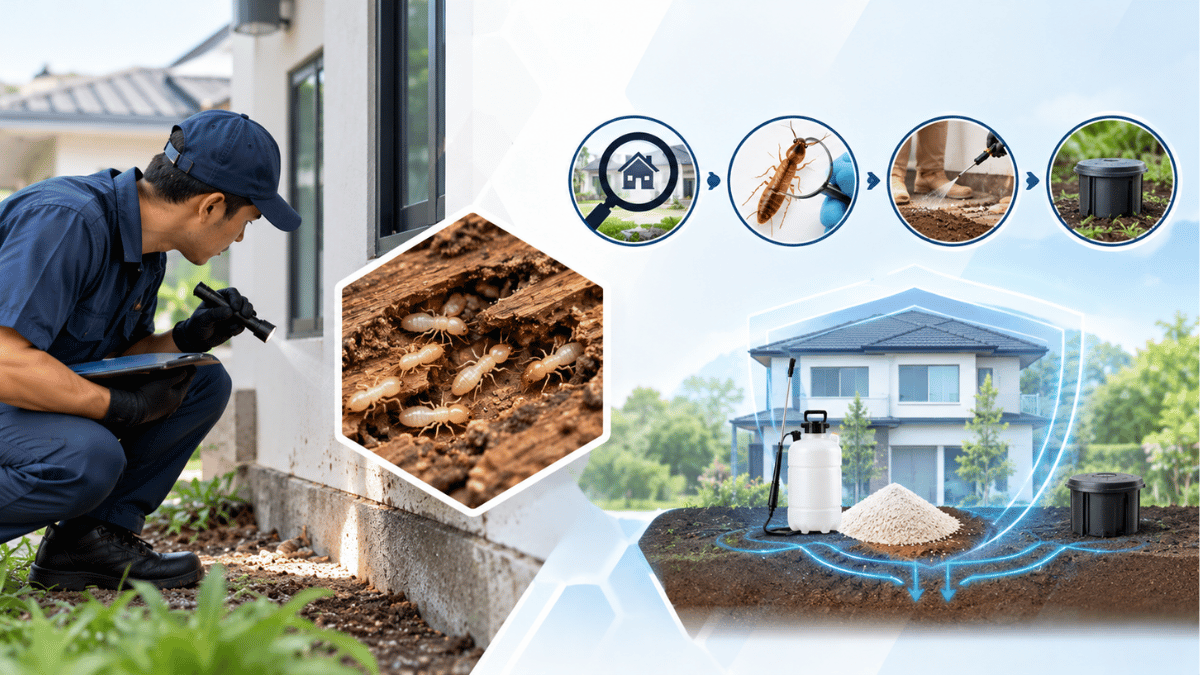
Control of termites generally involves four steps: inspection, identification of the exact species of the termite infestation, treatment based on the specific species and degree of damage, and subsequent monitoring after the procedure. The reason why termite treatments fail most of the time is the failure to adhere to all these steps; for instance, when spraying is done without proper inspection and identification of the species.
Step One: The Termite Inspection
All else will depend on the termite inspection, as it is impossible to have an exact pest control strategy without an exact diagnosis. What technicians seek is any evidence of termite activity, their potential access points, and the factors that made it possible for termites to inhabit your home.
What Technicians Look For
Inspectors check both inside and around the property, focusing on mud tubes along walls and foundations, hollow sounding timber, discarded wings, and blistered paint. Areas with moisture problems, such as leaking pipes, poor drainage, and damp subfloors, get extra attention, since termites are drawn to damp conditions. Homeowners can catch early clues themselves too, and knowing the signs of termites at home helps you point a technician toward the right rooms.
Tools Used to Find Hidden Colonies
If it is difficult to locate the colony through direct visual observation, then the experts can use moisture detectors and other equipment in order to pinpoint the exact location, as much of the movement takes place within walls and underground where no one can see anything. The monitoring stations can also detect the foraging of termites within the soil.

Step Two: Identifying the Termite Species
Once activity is confirmed, the species needs to be identified, because each behaves differently and responds to different methods. Subterranean termites nest in the soil and travel through mud tubes, while drywood termites live directly inside timber with no soil contact at all. Treating a drywood problem with a soil barrier, or the reverse, is a common reason homeowners end up paying for the same work twice.
Step Three: Choosing the Right Termite Treatment
With the species and extent of activity known, a treatment plan can be built around the property. Two approaches dominate, and many properties benefit from using both.
Liquid Soil Treatment
Soil applied barrier treatment is the most common technique for treating termite infestations, according to the US EPA. A liquid termiticide is applied into the soil around and beneath the structure, creating a chemical barrier that termites must cross to reach the timber. It needs to be applied thoroughly and evenly, since any untreated gap becomes a way through, which is why this method often involves drilling and careful mapping of the foundation.
Termite Baiting Systems
However, the case of baiting is slightly different. This involves placing baits in the soil that act on slow-release basis, whereby the worker termites pick up the bait from there and transport it back to the rest of the colony. The main reason why baits are used on a slow release basis is because they have to reach as many members of the colony as possible before they become weak.
Combining Methods for Severe Cases
Bait systems can be used alone or alongside liquid treatments, depending on the property. In cases with very dense populations or heavy damage, baiting on its own may not act fast enough, so liquid treatment is often used on the worst affected areas while baits work on the wider colony. Direct treatment of affected wood is sometimes added as well.
Termites Pest Control in Malaysia's Climate
Malaysia's heat and rainfall shape how termites pest control should be planned. Frequent heavy rain keeps soil moist and pushes activity toward buildings, and it also triggers winged reproductives to emerge in large numbers. Understanding termite swarming season helps homeowners treat a sighting as an early warning to act on, rather than a passing nuisance, since a swarm means a mature colony already exists nearby.

Step Four: Monitoring and Follow-Up
This is not the end of treatment as well; baiting stations have to be checked from time to time until termites' activities cease. In addition, even after the liquid barrier is installed, inspection becomes helpful because it will show whether or not any new termites' colonies appeared. The difference between temporary and permanent solution is in such continuous monitoring, and it also means that home remedy is unlikely to work because of lack of certainty about death of colony.
What Homeowners Can Do to Support Termite Control
The most effective treatment occurs when any factors which brought the termites are simultaneously remedied. This entails ensuring that there is no availability of food sources for termites, like making sure that woodpiles, cardboard, and timber off-cuts are not near the house, while ensuring that moisture issues are sorted by ensuring that there are no leaks and all gutters and downspouts are functional.
How Long Does Termite Control Take?
The time depends on the process. A liquid barrier is put in place in one visit, although subsequent inspections will follow. The use of baits is a slower process, and the elimination can take months to be achieved, with some activity and damage occurring before the bait starts its work. Viewing this process from this angle makes it easy to avoid mistaking something that is still working for a failure.
How Asteric Can Help
A termite control process should be started with a thorough inspection and ended with monitoring, rather than being done in between. Termite control services at Asteric begin by locating the source colony and identifying the species, then match a soil treatment, baiting system, or combination to your property, so the work reaches the nest rather than only the termites you can see.