Why Commercial Pest Control Is Not the Same as Home Treatment
Homeowners need pest elimination. Businesses need pest management.
The difference matters. A home treatment can be reactive. Commercial premises require ongoing, documented, and audit-traceable pest management programs because:
Regulatory bodies such as MOH, DBKL, MBPJ, and JAKIM conduct surprise inspections. A pest sighting during an audit can result in notices, fines, or premises closure under the Food Act 1983.
Food Hygiene Regulations 2009 legally require food premises owners to take immediate action against any pest presence and maintain records to prove it.
F&B operators pursuing HACCP, GMP, MeSTI, or Halal certification must demonstrate an active, documented pest control program as part of their audit trail.
Violations under the Food Act 1983 carry penalties of up to RM100,000 and can result in premises closure orders of up to 14 days.
A single viral post or negative review showing a pest in your premises can cause lasting reputational and revenue damage that no spray can undo.
Our commercial pest management contracts provide scheduled treatments, written service reports after every visit, and audit-ready documentation as standard.
Commercial Pests We Control and the Business Risks They Carry
Not all pests carry the same consequence for your business. Here is what is at stake.
Cockroaches
Contaminates food prep surfaces, spreads Salmonella and E.coli. A single sighting can trigger MOH closure orders.
View MoreRats and Rodents
Chews through wiring and packaging, contaminates stock, leaves droppings near food storage. Fire and health hazard.
View MoreFlies
Transfers bacteria between waste and food surfaces at high speed. Major risk in open kitchens and dining areas.
View MoreAnts
Infiltrates food packaging and dry goods storage. Difficult to eliminate without treating the colony source.
View MoreTermites
Silently destroys shelving, structural timber, and fixtures. Costly to repair and rarely covered by insurance without prior treatment.
View MoreMosquitoes
Health liability for outdoor seating areas and hospitality venues. Linked to dengue risk.
View MoreStored Product Insects
Moths, weevils, and beetles that infest dry goods, grains, and pantry stock. Common in F&B kitchens and warehouses.
View MoreBed Bugs
Critical for hotels, guesthouses, and serviced apartments. Spreads rapidly between rooms and damages online reputation overnight.
View More
industry guide
Industry-Specific Pest Management Programs
We do not apply the same program to a restaurant, a warehouse, and a hotel. Each industry carries distinct pest pressures, compliance requirements, and operational constraints. Here is how we approach each sector:
| Industry | Primary Pest Risk | Key Compliance Concern |
|---|---|---|
| Restaurants and Cafes | Cockroaches, flies, rodents | MOH Food Hygiene Regulations 2009, DBKL/MBPJ license renewal |
| Food Manufacturing | Stored product insects, rodents, flies | HACCP, GMP, MeSTI, FSSC 22000, JAKIM Halal audit |
| Hotels and Serviced Apartments | Bed bugs, cockroaches, rodents | Guest complaints, TripAdvisor exposure, STR license conditions |
| Offices and Co-Working Spaces | Ants, cockroaches, rodents | Building management tenancy compliance |
| Retail and Supermarkets | Rodents, ants, stored product insects | MOH inspection, mall tenancy health requirements |
| Warehouses and Logistics | Rodents, termites, stored product insects | GMP, client SLA compliance, insurance requirements |
| Clinics and Medical Facilities | Cockroaches, ants, flies | KKM health facility standards, sterile environment requirements |
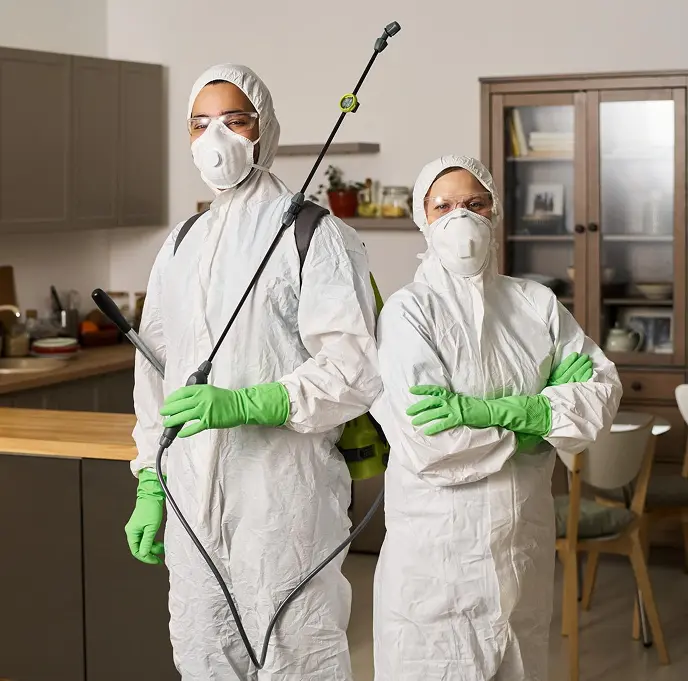
F&B and Restaurant Pest Control in Malaysia: A Closer Look
Food and beverage establishments carry the highest pest risk exposure of any commercial category in Malaysia. Your premises combine heat, moisture, organic waste, and high footfall daily, which are ideal conditions for cockroaches, flies, rodents, and ants.
Beyond the biological threat, the business consequences of a pest problem in an F&B outlet are severe:
MOH officers conduct routine and complaint-triggered inspections. Pest evidence without documented control records can result in closure notices issued under Section 11 of the Food Act 1983.
DBKL and MBPJ license renewals require premises to meet hygiene standards. Repeated pest findings can result in license suspension or non-renewal.
HACCP and GMP certification audits require a current, active pest control program with written records for every visit.
Viral exposure of a pest incident through social media or food delivery platform reviews can generate sustained customer avoidance that outlasts any operational fix.
Our F&B pest management programs are designed specifically to operate within your working hours. Treatments are scheduled before opening or after closing, use food-safe and low-odour methods in kitchen and food preparation areas, and every visit is followed by a written service report you can produce during any audit or inspection.
Running an F&B Outlet or Food Facility?
Our team will assess your premises, identify risk points, and recommend a program that keeps you compliant and inspection-ready.
Our Commercial Pest Management Approach: Integrated Pest Management (IPM)
Unlike basic spray-and-go treatments, our commercial programs use Integrated Pest Management, an internationally recognised methodology that combines inspection, monitoring, targeted treatment, and prevention.
What IPM means for your business:
Inspection First
We conduct a thorough site assessment before recommending any treatment, identifying entry points, risk zones, and pest activity hotspots specific to your premises layout.
Targeted Treatment
Treatments are applied only where needed, using the most appropriate method for each pest type and environment, including gel baiting, pheromone traps, UV fly traps, tamper-resistant rodent stations, and residual barrier treatments.
Proactive Monitoring
F&B operators pursuing HACCP, GMP, MeSTI, or Halal certification must demonstrate an active, documented pest control program as part of their audit trail.
Structural Recommendations
We identify and advise on entry points, drainage issues, waste management gaps, and other structural conditions that attract or harbour pests.
Documentation
Every visit produces a written service report. Pest activity trends, treatment methods used, products applied, and recommended corrective actions are all recorded, giving you a clear audit trail.
importance
Why Commercial Clients Choose Us
DOA-Licensed Technicians
All technicians hold valid Pesticide Applicator Licences (PAL/APAL) as required under Malaysia's Pesticides Act 1974.
Audit-Ready Documentation
Written service reports after every visit, formatted to support MOH, HACCP, and internal compliance audits.
Scheduled Around Your Operations
Treatments are timed to avoid peak business hours and avoid disruption to your customers or staff.
Food-Safe Treatment Methods
In food preparation and storage areas, we use food-contact-safe, low-toxicity products registered with the Department of Agriculture.
Single Contract, Multiple Locations
Ideal for businesses with multiple outlets across the Klang Valley. Consistent documentation and one point of contact.
Emergency Response Available
Fast callout for urgent pest incidents, including pre-inspection response when an audit or visit is imminent.
Flexible Contract Terms
Monthly, quarterly, or bespoke program frequency based on your industry requirements and risk level.
step by step
how it works?
Getting started with a commercial pest management contract is straightforward:
1
Contact Us
Call, WhatsApp, or submit an enquiry form with your premises type and location.
2
Free Site Assessment
A licensed technician visits your premises, assesses pest risk, and documents findings.
3
Custom Program Proposal
We recommend a program tailored to your industry, compliance requirements, and operational schedule.
4
Scheduled Service and Reporting
Treatments begin on an agreed schedule. Written reports are issued after every visit.
5
Ongoing Monitoring and Review
We track pest activity over time and adjust the program where needed, keeping your protection current.
faq
Frequently Asked Questions
Answers to common questions about our commercial pest control services.
How is a commercial pest control contract different from a one-off residential treatment?
A commercial contract includes scheduled visits at agreed intervals, written service reports for compliance purposes, monitoring between visits, and a documented audit trail. It is a managed program, not a single treatment.
Do you provide documentation for MOH or DBKL inspections?
Yes. Every service visit is followed by a written report detailing treatment methods, products used, pest activity observed, and recommendations. These reports are formatted to support health authority and local council audits.
Can you treat our premises without disrupting business hours?
Yes. We schedule treatments before opening or after closing. For F&B establishments and retail, this is standard practice. Emergency visits are also available when required.
We are applying for HACCP or MeSTI certification. Can you help?
Our commercial pest management programs are structured to meet the pest control requirements of HACCP, GMP, MeSTI, FSSC 22000, and Halal certification audits. We can advise on documentation and program frequency to support your certification process.
What if we have multiple outlets in different locations?
We offer consolidated contracts for multi-location businesses. A single agreement covers all outlets with coordinated scheduling, consistent documentation, and one point of contact for your operations team.
How quickly can you respond to an urgent pest situation?
We offer emergency response callouts for commercial clients. If you have a health inspection or audit approaching, contact us directly and we will prioritise your assessment.
Are the products you use safe around food and food preparation areas?
In food preparation and storage areas, we exclusively use DOA-registered, food-contact-safe products and methods, including gel baiting and non-chemical trapping where appropriate. We do not apply residual sprays to food contact surfaces.
Do you offer halal-certified pest control?
We use DOA-registered products that meet the requirements of halal food facility audits. If your establishment requires documentation confirming the suitability of treatment methods for halal compliance audits, we can provide this upon request.
Protect Your Business, Your License, and Your Reputation
Pest problems in commercial premises do not wait for a convenient moment. Whether you are preparing for a HACCP audit, renewing your DBKL premises license, or simply want a reliable, documented pest management program that keeps your business compliant year-round, we are ready to help.