
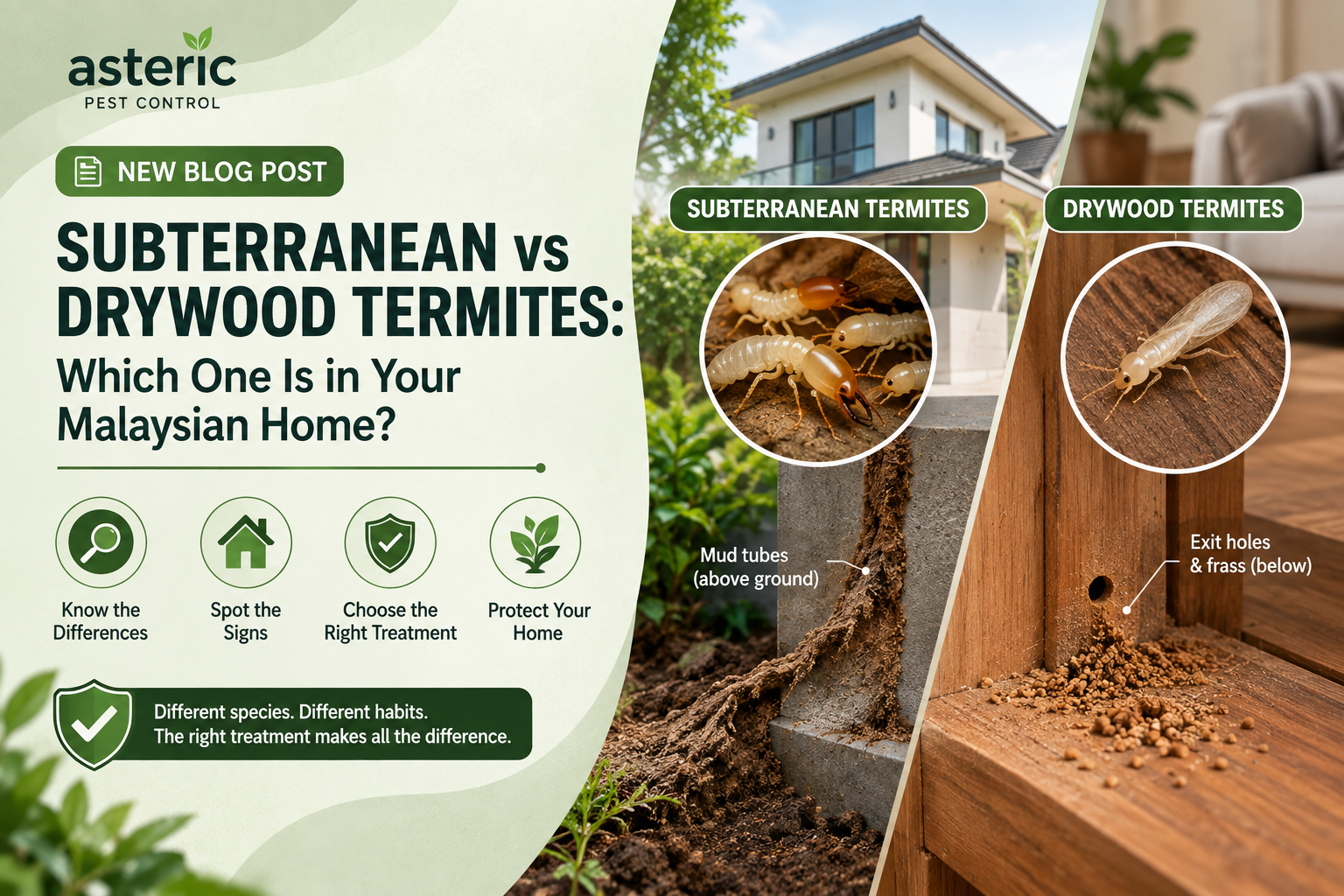
Subterranean vs Drywood Termites: Which One Is in Your Malaysian Home?
Not all termites are the same, okay. Treat the wrong type with the wrong method, and don't be surprised when your "solved" termite problem comes back to haunt you a few months later. Here's how to actually tell subterranean and drywood termites apart, and why it makes a big difference to what treatment you need.
So you see mud tubes on the wall, or a bunch of wings scattered near the window, or the wood sounds a bit hollow when you knock on it — first thought is usually just "aiyo, termites lah" and straight away call someone to spray. But here's the thing: subterranean and drywood termites don't live the same way, don't spread the same way, and definitely don't need the same treatment. Get the species wrong from the start, and you could be paying for a treatment that was never going to work in the first place.
The Real Difference: Where Do They Actually Stay
Honestly, the biggest difference between these two isn't how they look — most people can't tell termite species apart just by eye anyway. The real difference is where the colony lives, and that's what decides whether a treatment can even reach them.
Subterranean termites stay in the soil, not inside your house. They build those mud tubes you see so they can travel from the ground straight into your walls, flooring, and furniture, munching on wood along the way while the main colony chills safely underground where nobody can touch it. This is exactly why subterranean termites cause the most serious structural damage in Malaysia — once they get soil access, they can quietly spread through your whole house from just one entry point, and you won't even know until the damage is already bad.
Drywood termites work differently. They nest straight inside the wood they're eating — no soil, no mud tubes, nothing connecting them to the ground. One infested cabinet, a wooden beam, or even an old door frame can have a whole colony living inside it and you'd never guess. Good news is the damage usually stays contained to that one item. Bad news is you can easily bring them home yourself — say, buying second-hand furniture or untreated wood without realising it already has passengers.
How to Tell Them Apart
Subterranean termites usually come with mud tubes running along walls or foundations, especially near the ground. Damage tends to show up near the base of the house, skirting boards, or slab-level timber, and the wood often looks a bit damp or discoloured where they've been at it. The activity also tends to spread — you might notice it creeping from one room to another over time.
Drywood termites give themselves away differently. Instead of mud tubes, look out for small, hard, pellet-like droppings (called frass) collecting under furniture or wood. There'll usually be small, clean, round exit holes in the wood surface too. And unlike subterranean termites, the damage is usually isolated — just that one piece of furniture or beam, with no mud tube or soil connection anywhere nearby.
Quick way to check at home:
- Does the damaged wood actually touch the ground, or got mud tube leading to it? If yes, most likely subterranean.
- If the damage is just on one piece of furniture or wood with zero connection to the ground, probably drywood.
But seriously, the only way to know for sure is to get someone to actually inspect it.
Don't guess and hope for the best.
Why Knowing the Species Actually Matters
Soil treatment is the go-to for subterranean termites, but it does absolutely nothing for a drywood colony sitting comfortably inside a wooden beam with zero soil connection. And the other way round — spot-spraying one piece of furniture won't do much if there's a subterranean colony that's already snaked through your foundation into three other rooms.
This is also why DIY sprays and home remedies from Shopee or the hardware store often don't fix the problem long-term — they treat what you can see, but nobody's checking which species it actually is or where the colony is hiding. End result: you spend money, feel good for a few weeks, then the problem's back, sometimes worse because you lost time you could've used to catch it early.
So What Should You Do
If you're spotting any of the signs above, don't rush to pick a treatment first. Get the species and the colony location confirmed properly. That one piece of info decides everything after — whether you need soil treatment, baiting, or direct corrective treatment, and roughly how far the problem has already spread through your place.
Not Sure What Type of Termite You've Got?
Let a professional inspection settle it for you — identify the species, find the colony, and confirm the right treatment before you waste money on the wrong one. [Check Out Our Termite Control Services]