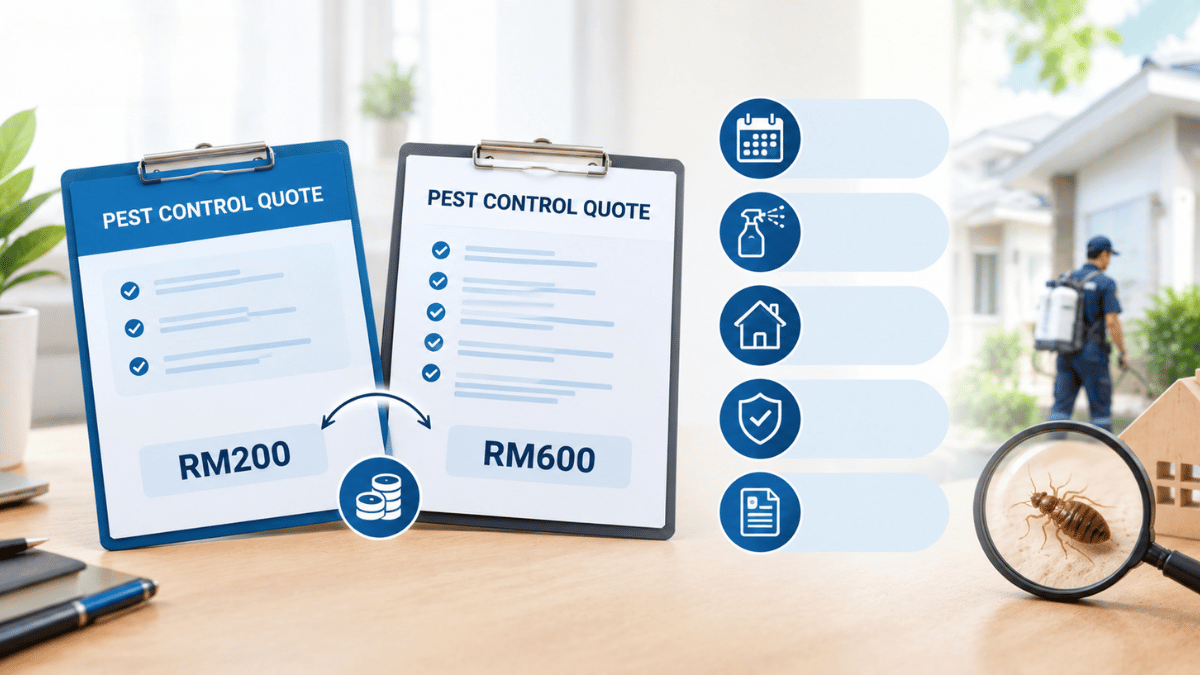
You approach two firms for pest extermination of the same building, and the cost estimates you receive range from RM200 to RM600. The temptation to think that one of the firms is overpricing might be strong, but the reality is that such a disparity in estimates is often due to the services covered in each estimate and not because one firm is being too greedy.
Why Is Pest Control Expensive Sometimes and Cheap Other Times?
Pest control is not an item with a fixed price tag but consists of labor, chemicals, knowledge, and follow up and each company packages them differently. The lower quote includes just one visit and one spraying job, whereas the higher one includes more than one visit, the warranty, and a professional report as well. When it comes to asking the question “Why is pest control expensive?”, the answer is quite simple, these quotes are different services altogether.

The Pest Control Price Difference Starts With Scope
The biggest source of any pest control price difference is scope, meaning how much work is actually promised. For typical ranges by pest type, the full pest control price breakdown shows how a one off general treatment sits far below a multi visit plan with a warranty, even though both may be described as "pest control".
Number of Visits Included
A single treatment might run around RM150 to RM330 for a terrace house, while a plan covering a full breeding cycle with a warranty sits closer to RM500. The second looks more expensive until you notice it includes the follow up visits that infestations usually need to actually clear.
Treatment Method Used
A surface spray, gel baiting, and a full soil treatment are very different jobs. Termite work is the clearest example, since a baiting system and a soil barrier are priced very differently because the materials, labour, and drilling involved are not comparable.
Area and Property Size Covered
Some quotes treat only the room where pests were spotted, while others cover the whole property, including outdoor perimeters and hidden voids. A quote that quietly excludes half the property will always look cheaper.
Warranty Terms
The value of a warranty is in what it says regarding when the company will stand down and back off without paying any additional fees. A warranty that is not clear, or worse yet, non-existent, makes it easy to offer an estimate at a lower price.

Hidden Differences That Don't Show Up on the Quote
Some of the most important differences never appear as line items, which is why two quotes can look similar and still deliver very different results.
Licensing and Compliance
Operating legally costs money, including licensed technicians, proper chemical storage, and compliance paperwork. An unlicensed operator can undercut everyone because those costs simply aren't being paid, which is a big reason the cheapest quote isn't always the safest one. Learning how to spot a licensed pest control company is the fastest way to separate a genuinely competitive price from a corner cutting one.
Products and Chemicals Used
Quotes rarely say what's actually going into your home. Better products, and using the right concentration for the job, cost more than a generic spray, and a company that won't tell you what it uses is hiding a difference that affects both results and safety.
Technician Experience and Time on Site
A thorough inspection takes time, and accurately identifying the pest and locating the nest is where experience matters most. A rushed ten minute visit costs less to deliver, but it's also the visit most likely to miss the actual source of the problem.
Reports and Documentation
A proper service report showing what was found and treated takes effort to produce, and it's essential for businesses that need records for audits. Cheaper quotes often skip this entirely.
How to Compare Two Quotes Properly
It is not about adding up the two amounts, but rather it is about knowing how much you can get with each total. Make sure to use the same criteria for comparison purposes: the insect being exterminated, the extermination method used, the number of visits required, the coverage area, the warranty period, and the documentation supplied. If one quote misses a point on this list, then this is not a savings, this is a missing point.
Questions to Ask Before You Say Yes
A few direct questions clear up most confusion. Does the price include follow up visits, and how many? Which areas of the property will be treated? What products will be used? What exactly does the warranty cover, and how do I claim it? Will I receive a written report after each visit? A company confident in its pricing will answer these clearly, and vague answers tell you something too.
When a Low Quote Is a Red Flag
Low price does not always mean poor quality, yet some signs require you to take your time. If an offer is much lower than all others for the same service, no contract provided, the insistence on paying the full sum upfront, and not willing to give the license details, it means that the price is low due to the absence of certain features. The treatment that is unsuccessful and requires to be redone is more expensive than the right one.
When a Higher Quote Is Actually Better Value
The reverse also holds. A higher quote that includes multiple visits, a clear warranty, proper inspection, and documentation can cost less over a year than repeated cheap treatments that never fully resolve the problem. For businesses, the value is even clearer, since reliable documentation and consistent service protect against failed audits that cost far more than the price gap between quotes.
How Asteric Can Help
We keep quotes simple to compare by spelling out the pest, the method, the number of visits, the area covered, and the warranty terms in writing, so you can see exactly what you're paying for before committing. If you already have a quote from another company, we're happy to walk through what's included and what isn't, so the comparison is based on the service rather than just the total.